 TR
TR AR
AR DE
DEHair Transplant: Process, Methods and Planning
- Home
- Hair Transplant: Process, Methods and Planning
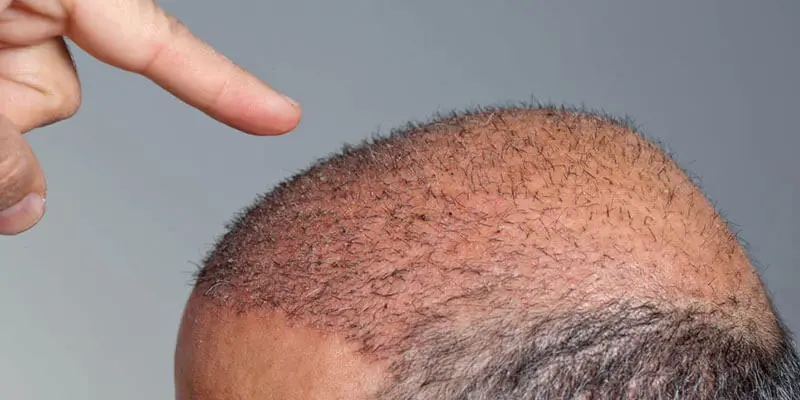
A hair transplant is a medical procedure that moves hair follicles (grafts) from a donor area to areas with hair loss. The donor area is usually the back and sides of the scalp. A hair transplant should take place at an authorised health facility, under the responsibility of authorised health professionals.
This page explains how the hair transplant process works, how methods such as FUE and DHI differ, what donor area and hairline planning involve, how aftercare works and what to ask before you decide. The information is general and does not replace a personal assessment.
Suitability is not decided by age or by how the hair loss looks. A health professional assesses several things together:
Bald areas caused by burns or injuries can also be part of an assessment.
Methods differ in how follicles are taken from the donor area and how they are placed.
With FUE, follicles are removed from the donor area one by one. No strip of skin is taken. Small dot-like marks can remain at the removal sites. Read more on the FUE technique page.
DHI describes an approach in which a special implanter pen can be used when the follicles are placed. See the DHI technique page for details.
With FUT, a thin strip of skin is taken from the donor area and divided into grafts. A linear scar can remain in the donor area. More on the FUT technique page.
Neither method is better for everyone. The right one depends on hair structure, donor area, the area to be transplanted and the density you plan. For a comparison, see differences between FUE and DHI.
The donor area is where the follicles for a hair transplant are taken from. Every person has a different donor capacity, so the number of grafts that can be transplanted differs from person to person. Not overusing the donor area helps keep options open if further planning is needed later. An exact graft number cannot be given without an assessment.
Hairline planning is not only about covering bald areas. Face proportions, the current hairline, age, how the hair loss is progressing, donor area capacity and hair structure are considered together. Good planning also matters for protecting the donor area in the long term.
Local anaesthetic can be used. What you feel during and after the procedure varies from person to person. The length of the procedure depends on the method, the number of grafts and your personal plan. Talk through your expectations with a health professional beforehand.
After the procedure you receive guidance on the first wash, daily care and what to look out for. You should expect these instructions to be shared in writing by the facility that carried out the procedure. Following them matters for a healthy recovery. If you have questions during aftercare, contact the facility.
Growth is gradual. Some transplanted hair may shed in the first weeks, and this temporary shedding can be part of the process. New growth usually starts within months, and the process can take around a year. Speed and density differ from person to person.
A hair transplant is a medical procedure, so risks and temporary effects can occur. Examples include:
How often and how strongly these occur depends on the person and the procedure. Discuss possible risks with a health professional before you decide. Results cannot be guaranteed.
No. Suitability depends on donor area capacity, type of hair loss, general health and medication, assessed together.
Local anaesthetic can be used. What you feel varies from person to person.
It varies. An exact number cannot be given without a personal assessment.
Growth is gradual. New hair usually starts to appear within months and the process can take around a year.
No. Biology and other factors affect the outcome.
At an authorised health facility, under the responsibility of authorised health professionals.
To ask about the hair transplant process, you can reach us through the contact page.
We use analytics cookies to understand how visitors use this site. They stay off until you say yes. Privacy Policy